
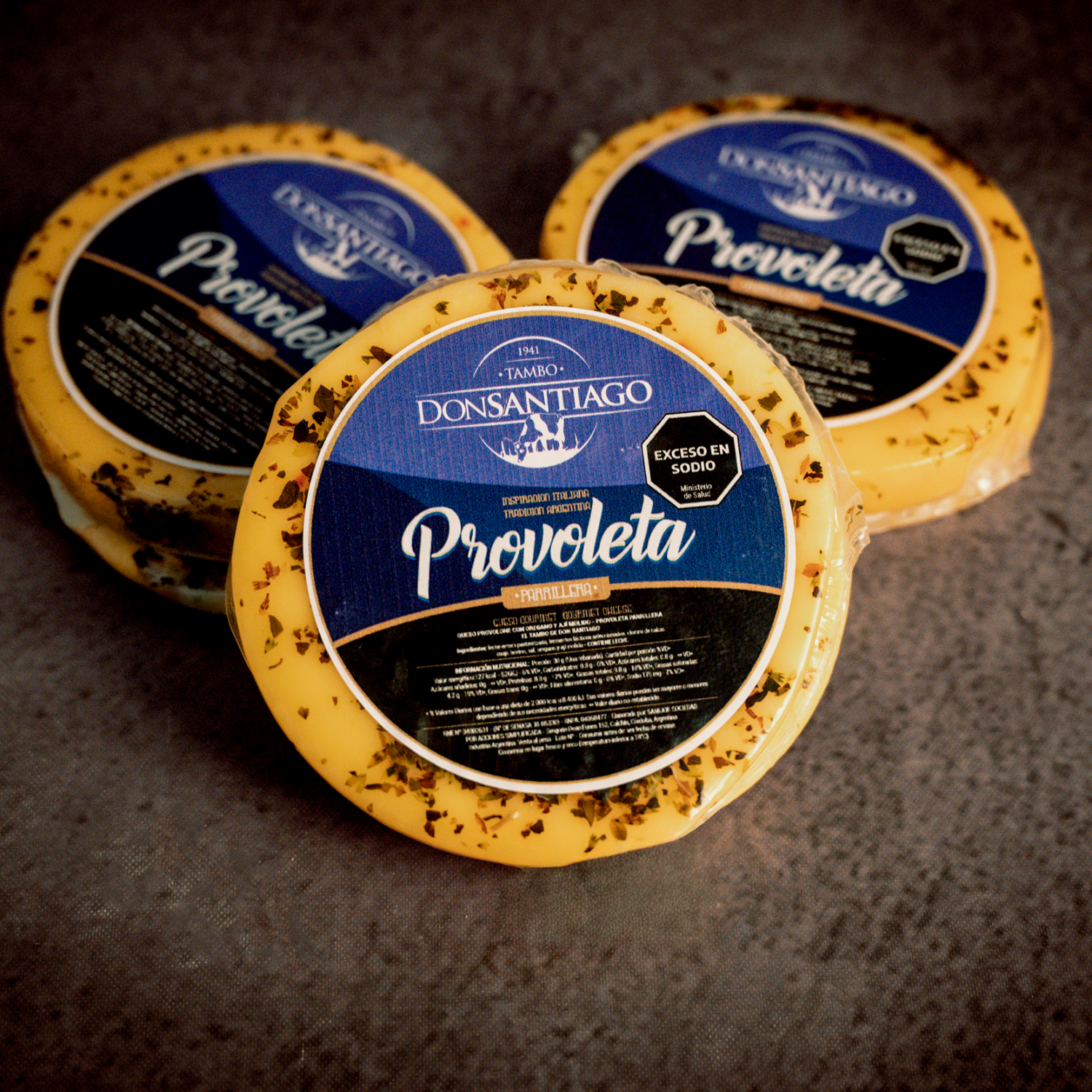
Provoleta
Milk: Cow
Type: Hard, stretched-curd cheese, natural rind
Protected designation of origin: No
Fat content: 49%
Aging: 2 to 3 months
Texture: Mild
Wine pairing: Beer
Country of origin: Argentina
HISTORY
When we hear “Provolone” and “Provoleta,” it’s easy to think they’re the same—but they’re not.
Provolone is the original Italian cheese, produced in various shapes such as pear, sausage, or cone, typically between 10 and 15 cm in size.
Provoleta, on the other hand, was born in Argentina around 1940, thanks to Natalio Alba, an Italian immigrant from Rossano, Calabria, and dairy expert. He introduced the Italian Provolone to Argentina’s traditional barbecues (asados), giving rise to a new cheese with local character.
The name Provoleta derives from Provolone but represents a uniquely Argentine adaptation, famously served in the legendary Carritos de la Costanera—the iconic food carts along Buenos Aires’ riverfront where locals enjoyed grilled delicacies, especially asado.
APPEARANCE
Provoleta is a mature, stretched-curd cheese with a dense, firm, and elastic texture. The curd is heated to about 80°C and kneaded into concentric layers, forming its characteristic cylindrical shape.
It has a slightly piquant flavor, distinctive and robust. After at least one month of maturation, it develops its typical yellowish hue, aroma, and firmness—hallmarks of this grilled cheese icon of the Río de la Plata region.
In Argentina, it’s affectionately known as “queso parrillero” (grilling cheese).
USE
Before the asado begins, Argentinians often enjoy a slice of sizzling Provoleta. This cheese melts beautifully, serving as the perfect appetizer to “trick the stomach” while waiting for the main barbecue.
Typically, it’s cooked as a thick round slice, browned on a griddle with olive oil, herbs, or tomato and oregano. The rind keeps it in shape while melting inside, creating a soft, golden crust.
Some cooks lightly flour the surface to prevent over-melting. It pairs wonderfully with beer, cured meats, or grilled vegetables, embodying the warmth and flavor of Argentine gatherings.