Di Fossa
Milk: Cow
Type: Semi-hard cheese, irregular shape, rindless
Aging: 3 months
Sharpness: Strong
Wine pairing: Malbec
Country of origin: Italy
Region: Emilia-Romagna
HISTORY
Formaggio di Fossa is a typical product from the Emilia-Romagna region, made from cow’s milk. It is aged for about three months in the famous “fossas,” which are ancient tufa pits carved into the ground.
Preparing the pits is almost a magical ritual. The “infossatura” (the placement of the cheeses into the pit) takes place at the end of August or early September. The tufa creates a unique microclimate. The pits must be at least ten years old, since only after long use do the bacteria from this special tufa develop the ability to give the cheese its characteristic flavor and aroma.
In August, the pits are sterilized by burning straw to remove moisture. Their walls are always covered with straw and wooden sticks. The cheese is placed in cotton bags and then lowered into the communal pits, which are sealed with plaster. A few days after being sealed (the pit must be completely filled), the reduced oxygen level triggers an anaerobic fermentation process, breaking down fats and producing short-chain fatty acids — mainly from lactose fermentation — which are responsible for the distinctive qualities of Formaggio di Fossa.
At the end of the maturation period, the process known as “sfossatura” takes place, when the pit is opened, and the cheese bags are retrieved.
The traditional opening is celebrated on November 25th, the day of Saint Catherine of Alexandria, with a great festival that in just a few years has become a true celebration of Formaggio di Fossa.
APPEARANCE
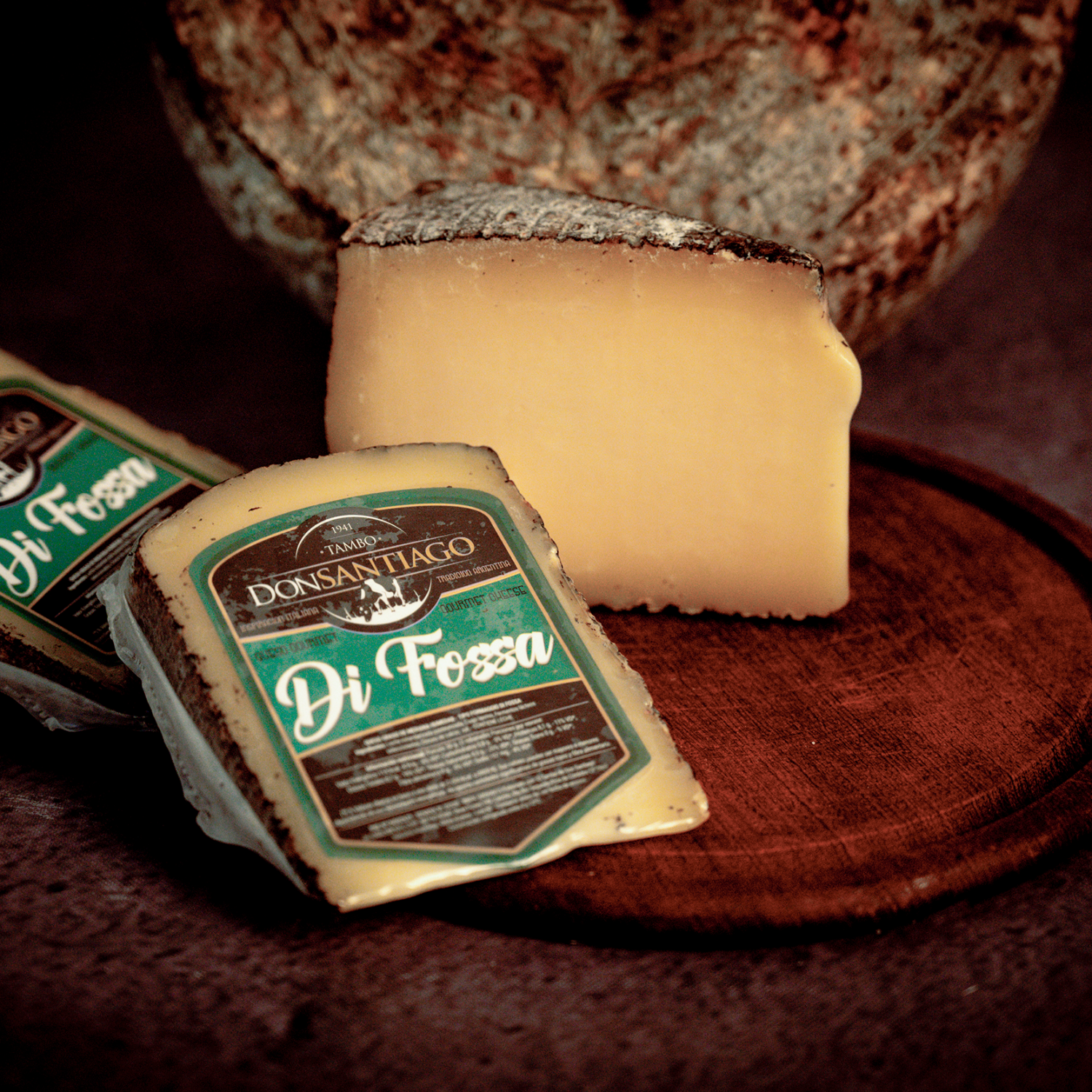
The cheese becomes heavily deformed from its original cylindrical shape due to the anaerobic fermentation, which softens and compresses the cheese. As a result of the stacking inside the communal pits, the rind is no longer distinguishable from the paste, which becomes compact and crumbly. Its color ranges from white to pale yellow, while the flavor starts out delicate and almost sweet but becomes increasingly bitter and spicy over time, with an aroma reminiscent of sulfur, truffle, and moss.
Additionally, the cheese is covered with a layer of alfalfa, the material used during its aging in the fossas.
USE
For those who love intense flavors, it pairs beautifully with chestnuts, honey, or jams. It can also be added to salads and soups, but in truth, Formaggio di Fossa needs nothing else — it is exceptional on its own.
Perfect for gratinating oven-baked vegetables or as a filling for lasagna.